Introduction
Germany is one of the strongest economies in Europe and a global leader in manufacturing and industrial production. The country is home to many world-famous companies in sectors such as automotive manufacturing, engineering, electronics, and machinery production. Because of its expanding industrial sector, Germany has been facing a shortage of skilled and semi-skilled workers in factories and manufacturing facilities.
To address this issue, many German companies are now hiring international workers and offering visa sponsorship opportunities. These jobs allow foreign workers to earn competitive salaries while gaining valuable international work experience.
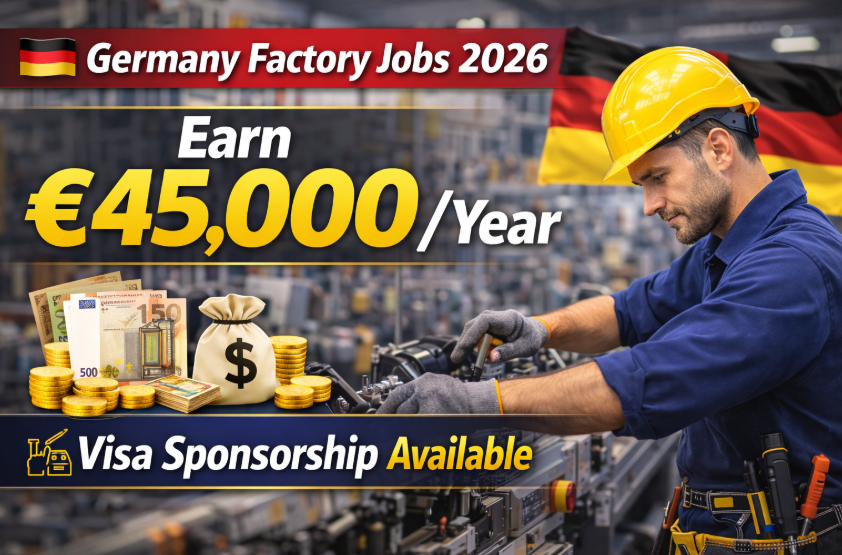
Factory jobs in Germany can offer annual salaries ranging from €28,000 to €45,000 depending on the role, experience, and employer. With strong labor protections and a high quality of life, Germany has become a popular destination for foreign workers looking for stable employment in Europe.
Why Germany Needs Factory Workers
Germany’s industrial sector is growing rapidly, and the country relies heavily on skilled and semi-skilled labor to maintain its production output.
Several factors contribute to the shortage of factory workers in Germany:
An aging workforce
Expansion of manufacturing industries
Increasing demand for exports
Shortage of technical workers
Because of these challenges, many companies are recruiting workers from outside the European Union to fill important positions.
Industries that frequently hire factory workers include:
Automobile manufacturing
Electronics production
Food processing
Packaging and logistics
Industrial machinery production
Types of Factory Jobs Available
Foreign workers can apply for a wide range of factory positions in Germany.
Common factory jobs include:
Production worker
Machine operator
Assembly line technician
Warehouse operator
Maintenance technician
Some positions require technical skills or vocational training, while others focus mainly on manual work and on-the-job training.
Salary Expectations
Factory workers in Germany receive competitive wages along with strong worker protections.
Typical salary ranges include:
Entry-level worker
€2,200 – €2,600 per month
Experienced worker
€2,800 – €3,500 per month
Technical specialist
€3,800 – €4,500 per month
In addition to the base salary, employees often receive bonuses, overtime pay, and social benefits.
Visa Sponsorship Options
Foreign workers who want to work in Germany can apply through several visa pathways.
German Work Visa
This visa allows skilled professionals to work legally in Germany with an employer.
EU Blue Card
The EU Blue Card is designed for highly skilled professionals and allows workers to live and work in Germany.
Skilled Worker Immigration Act
Germany has introduced new immigration rules to attract foreign workers to fill labor shortages in several industries.
Requirements
Applicants typically need to meet several requirements including:
Relevant work experience
Basic German or English language skills
Valid passport
Employment contract from a German employer
Health insurance coverage
Some technical jobs may also require vocational training or certifications.
Benefits of Working in Germany
Germany offers many benefits for international workers.
Some advantages include:
High quality healthcare system
Strong labor laws and worker protections
Paid vacation days
Opportunity to apply for permanent residency
Excellent public transportation and infrastructure
Many workers also appreciate Germany’s safe living environment and strong economy.
Conclusion
Germany’s manufacturing sector offers excellent job opportunities for foreign workers looking for stable employment in Europe. With salaries reaching up to €45,000 per year and visa sponsorship opportunities available, factory jobs in Germany provide a great pathway for international workers.
For individuals seeking international work experience and long-term career growth, Germany remains one of the most attractive destinations in Europe.




Be First to Comment